
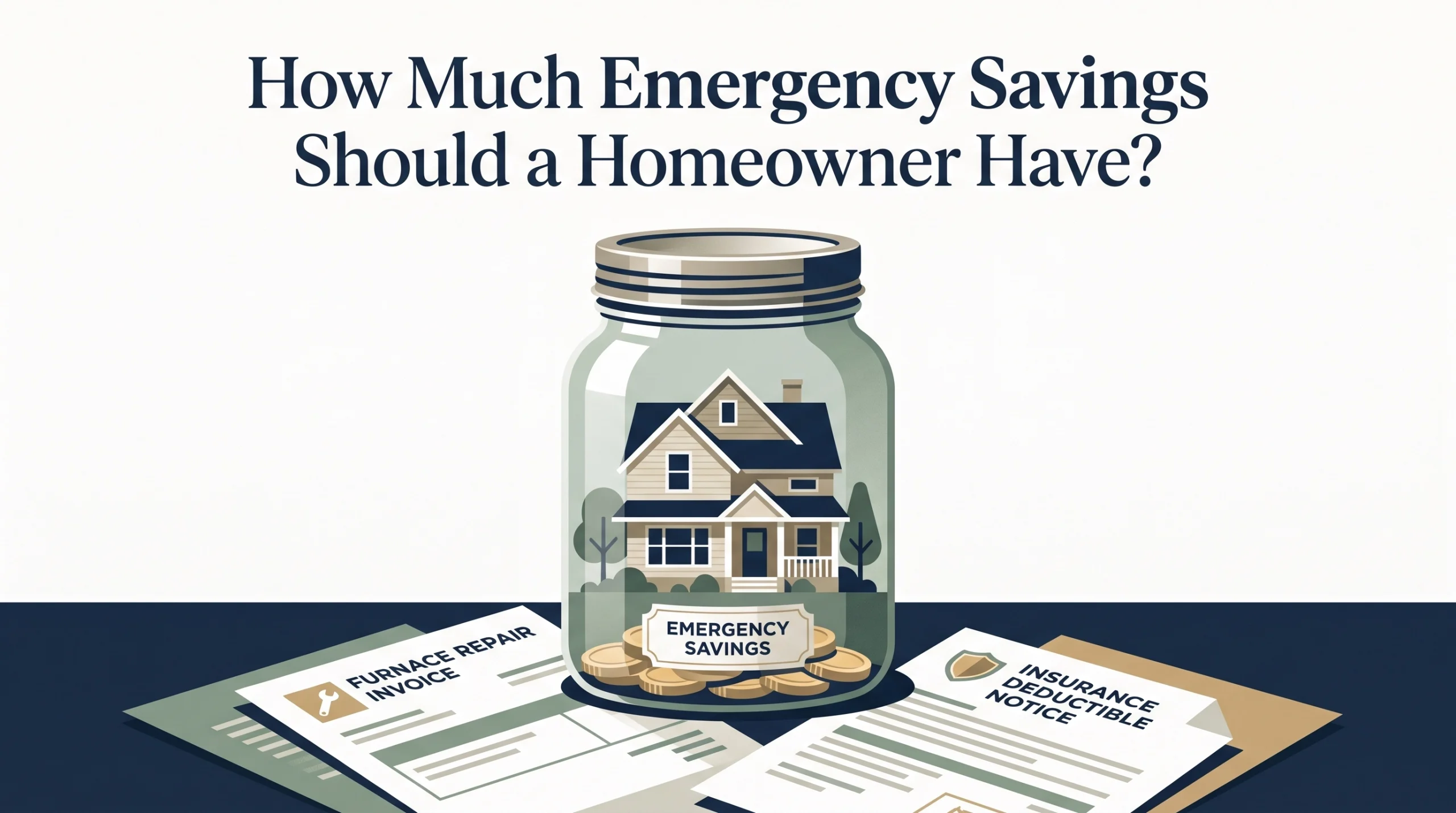
Owning a home creates expenses that renters may not have to handle. A furnace can stop working, a roof can leak, or an insurance claim can leave you responsible for a large deductible.
An emergency fund helps you handle those costs without immediately using a credit card, personal loan, or home equity. There is no single amount that fits every household, but homeowners can build a useful target based on essential expenses, income stability, property condition, and insurance coverage.
Start With Three to Six Months of Essential Expenses
A common starting point is enough savings to cover three to six months of essential household expenses. Fannie Mae includes this range in its guidance on preparing for the costs of homeownership.
Essential expenses are the bills you would need to continue paying during an income disruption. They can include the mortgage payment, utilities, food, transportation, insurance, minimum debt payments, health care, and necessary child-care expenses.
Assume those expenses total $4,000 per month. A three-month reserve would be $12,000, while six months would be $24,000. These figures are not lending requirements or universal rules. They provide a range that can be adjusted for your household.
Decide Where You Fit Within the Range
A dual-income household with stable employment may feel comfortable near the lower end of the range. If one person temporarily loses income, the other income may still cover part of the monthly budget.
A household may need a larger reserve when it relies on one income, receives commissions, owns a business, or works in an industry where finding a similar position could take longer. Families with dependents or high health-care costs may also need more protection.
Job stability is only one consideration. The condition of the home, insurance deductibles, available credit, and support from family can all affect the appropriate savings target.
Homeowners May Need Two Savings Funds
It can be helpful to separate emergency savings from planned home maintenance. The emergency fund protects against job loss, medical expenses, major vehicle repairs, and other unexpected financial shocks.
A home maintenance fund covers costs that are expected eventually, even if the timing is uncertain. This could include replacing an aging water heater, servicing the heating system, repairing a fence, or replacing worn appliances.
Fannie Mae recommends building a separate maintenance and repair budget so emergency savings remain available for other serious needs. Keeping the funds separate also makes it easier to see whether you are prepared for both routine ownership and a larger disruption.
Consider the Age and Condition of the Home
A newer home may have recently installed systems and builder warranties, but that does not mean it will have no expenses. Appliances can fail, deductibles still apply, and warranties may exclude certain problems.
An older property may require a larger maintenance reserve. Review the approximate age of the roof, furnace, air conditioner, windows, plumbing, electrical system, and major appliances.
A home inspection can identify visible concerns before purchase. It cannot predict when every component will fail. Buyers should review the inspection report and create a savings plan for items that are working but approaching the end of their expected life.
Include Your Insurance Deductible
Homeowners insurance does not pay every repair expense. Policies contain deductibles, coverage limits, exclusions, and claim requirements.
Review the deductible for wind, hail, and other covered losses. Some policies may apply a separate percentage-based deductible for certain events. That amount could be much higher than the standard deductible shown elsewhere in the policy.
Fannie Mae’s insurance coverage guide notes that a higher deductible can quickly reduce an emergency fund. Nebraska homeowners should know what they would need to pay after hail, wind, water, or other property damage before building their savings target.
Do Not Count Home Equity as Emergency Cash
Home equity can be valuable, but it is not the same as money in a savings account. Accessing equity may require selling the property or qualifying for a HELOC, home equity loan, or cash-out refinance.
Approval is not guaranteed. Income, credit, property value, existing debt, and lender requirements will be reviewed. Available credit could also be reduced or frozen under circumstances permitted by the loan agreement and applicable law.
A home equity line may support a broader financial plan, but it should not be the only emergency plan. Accessible savings can be used immediately without a new approval, property valuation, closing process, or monthly loan payment.
Where Should You Keep Emergency Savings?
Emergency money should be safe and reasonably easy to access. A separate savings account at an insured financial institution is a practical choice for many households.
The FDIC recommends using an insured savings account for money set aside for unexpected expenses. A separate account can also reduce the temptation to spend the money on routine purchases.
Stocks and other investments may provide stronger long-term growth, but their values can fall when the money is needed. Retirement accounts can create taxes, penalties, or lost future growth when used early. Emergency savings normally serves a different purpose than long-term investing.
How Can You Build the Fund?
Begin with a smaller first goal if three to six months of expenses feels too large. Saving enough to cover one insurance deductible or one mortgage payment can still provide useful protection.
Set up an automatic transfer after each payday. Tax refunds, bonuses, commissions, and proceeds from selling unused items can also help build the account.
The Consumer Financial Protection Bureau recommends creating a dedicated emergency fund and reviewing the types of unexpected expenses you have experienced before. A realistic monthly contribution is more useful than a large goal that never becomes part of the budget.
After using the fund, build it again. Paying for a true emergency from savings is not a failure. That is the reason the money was set aside.
Pros and Cons of Holding More Cash
A larger emergency fund can reduce stress and limit the need to borrow. It can provide time to address a job loss, pay an insurance deductible, or compare repair estimates without making an immediate decision under pressure.
The tradeoff is that savings accounts may earn less than long-term investments. Keeping too much cash can slow retirement investing, debt repayment, or other financial goals.
The right balance depends on the household. Emergency savings should provide meaningful protection without replacing every other part of the financial plan.
Who May Need a Larger Emergency Fund?
A larger reserve may be appropriate for self-employed homeowners, commission earners, single-income families, and people working in specialized positions. It can also make sense for owners of older homes, rural properties, acreage, or homes with major systems nearing replacement.
Homeowners with large insurance deductibles, limited available credit, or significant family obligations may also need more savings. Someone planning to retire or reduce work hours should review the target before income changes.
Build the Reserve Into the Homebuying Plan
Buyers should not focus only on accumulating the down payment and closing costs. The amount remaining after closing matters too.
At Capital City Mortgage, we help Nebraska buyers compare down-payment choices, closing costs, and the complete monthly payment while protecting reasonable savings after closing. We work with multiple lenders and prepare buyers carefully so the financing fits both the purchase and the responsibilities that follow it.
Frequently Asked Questions
How many months of expenses should a homeowner save?
Three to six months of essential expenses is a common starting range. The right target depends on income stability, dependents, property condition, insurance deductibles, and other household risks.
Should home repairs come from my emergency fund?
A sudden major repair may require emergency savings, but planned maintenance should ideally have a separate fund. This keeps the emergency account available for job loss, medical costs, and other financial shocks.
Does home equity count as emergency savings?
No. Accessing equity usually requires selling the home or qualifying for new financing. A savings account provides more immediate access without creating another debt payment.
Should I use all my savings for a larger down payment?
Not automatically. A larger down payment may reduce the loan or mortgage insurance, but using all available cash can leave you unprepared for repairs, deductibles, moving expenses, and income disruptions.