
You do not always need 20% down to buy a house. The money required depends on the home price, loan program, down payment, closing costs, seller credits, prepaid expenses, and the amount you want left in savings.
The down payment is usually the largest expense, but it is not the only one. Buyers also need to plan for earnest money, inspections, an appraisal, closing costs, taxes, insurance, moving, and repairs.
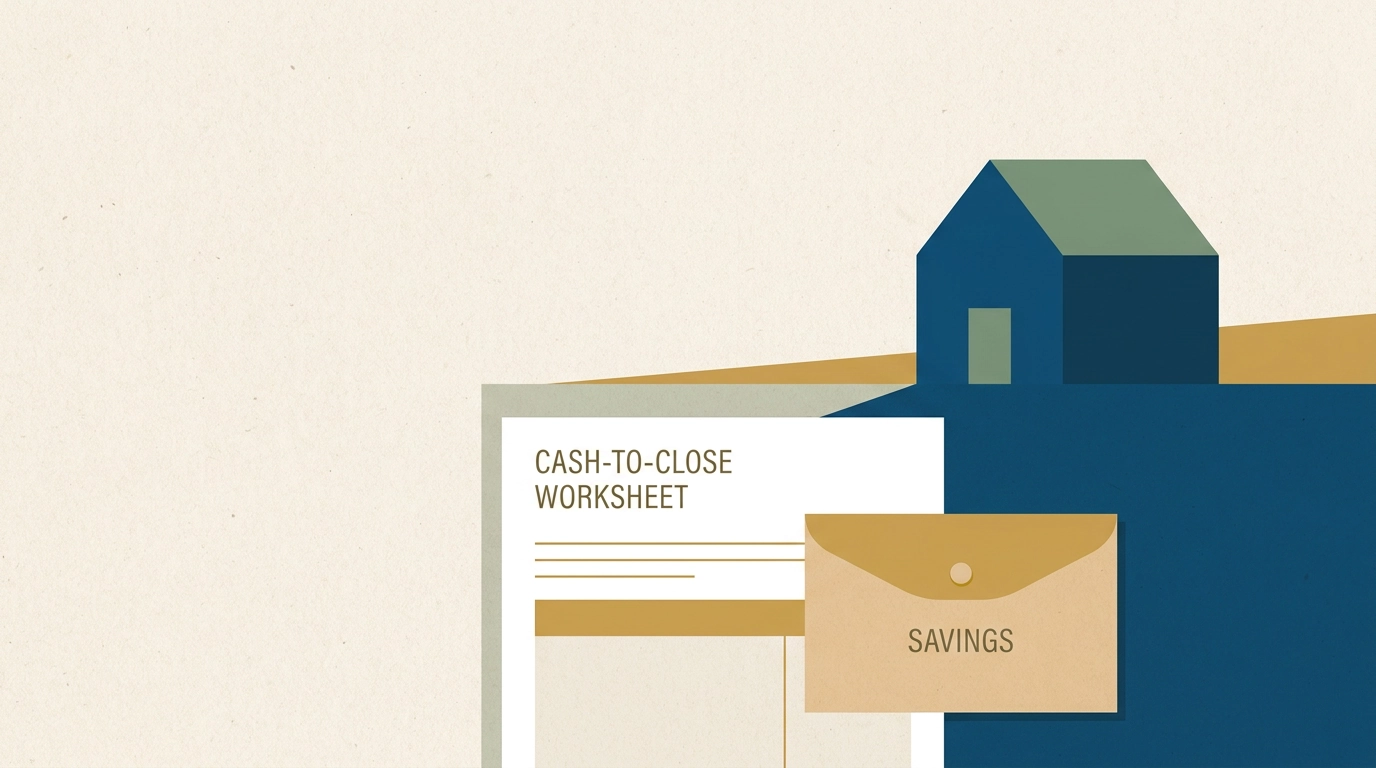
The best estimate comes from building a complete cash-to-close plan before you begin making offers.
How Much Down Payment Do You Need?
The minimum down payment depends on the mortgage program and your qualifications.
Some conventional loans allow eligible first-time buyers to put 3% down. Other conventional options commonly require 5% or more. FHA loans generally allow a 3.5% down payment for qualifying borrowers who meet the applicable credit requirements.
Eligible VA and USDA buyers may qualify for no-down-payment financing. These programs still have eligibility, income, property, credit, and underwriting requirements. No down payment also does not mean no money is needed for the transaction.
Freddie Mac explains that down payments can range from about 3% to 20%, depending on the loan and borrower’s circumstances.
Do You Need 20% Down?
A 20% down payment can reduce the loan amount and monthly payment. On a conventional mortgage, it can also eliminate the need for private mortgage insurance.
However, 20% is not a universal requirement. Waiting to save that amount may not be practical or necessary when a lower-down-payment option produces an affordable payment and leaves the buyer with adequate savings.
Consider a $300,000 home. A 20% down payment would be $60,000, while 5% would be $15,000. The smaller down payment creates a larger loan and may require mortgage insurance, but it preserves $45,000 before accounting for other costs.
The correct comparison includes the payment, mortgage insurance, cash needed, remaining reserves, and expected time in the home. A larger down payment is not automatically better if it leaves the buyer with no emergency fund.
How Much Are Closing Costs?
Closing costs are separate from the down payment. They can include title and settlement services, recording charges, an appraisal, credit-report charges, lender costs, and other services required to complete the transaction.
Fannie Mae advises buyers to prepare for closing costs that may equal roughly 2% to 5% of the loan amount. The actual amount may be lower or higher based on the lender, loan program, property, location, and transaction.
Capital City Mortgage does not add unnecessary lender underwriting, processing, or administrative fees. Buyers still need to plan for legitimate third-party charges, government fees, and any discount points selected for the interest rate.
The Loan Estimate provides an itemized estimate after the buyer applies for a mortgage and identifies a property. Compare the total costs and cash needed rather than focusing on one advertised fee.
Prepaid Expenses and Escrow Deposits
The amount due at closing may include more than the down payment and loan charges. Buyers often prepay the first year of homeowners insurance and fund an escrow account for future property-tax and insurance bills.
Prepaid interest may also be collected for the period between closing and the end of that month. The amount changes with the loan balance, interest rate, and closing date.
These items increase cash to close, but they are not all fees charged for obtaining the mortgage. The Consumer Financial Protection Bureau explains that prepaid interest, the first insurance premium, and initial escrow deposits are commonly collected at closing.
Nebraska property taxes can make escrow estimates important. New-construction buyers should be especially careful because current tax records may reflect vacant land or a partially completed home rather than the finished property.
What Happens to Earnest Money?
Earnest money is paid after an offer is accepted to show the seller that the buyer intends to complete the purchase. The amount is negotiated in the purchase agreement and held by an approved party until closing or termination of the contract.
If the purchase closes, earnest money is normally credited toward the down payment, closing costs, or other funds due. It does not usually increase the buyer’s total purchase expense.
Assume a buyer needs $22,000 at closing and previously deposited $3,000 in earnest money. The deposit would normally appear as a credit, leaving about $19,000 due before any other adjustments.
The purchase agreement controls when earnest money is refundable. Buyers should understand the financing, inspection, appraisal, and other contract deadlines before sending the deposit.
Budget for Costs Outside the Closing
Some purchase expenses may be paid before closing and may not appear in the final cash-to-close amount. A home inspection is a common example. Specialized inspections for radon, sewer lines, wells, septic systems, pests, roofs, or structural concerns may also be appropriate.
Buyers should also prepare for moving expenses, utility deposits, locks, window coverings, furniture, and immediate repairs. These costs vary widely based on the property and household.
The CFPB encourages buyers to consider closing costs, moving, furniture, repairs, and home improvements when deciding if they are financially prepared.
Can Seller Credits Reduce the Cash Needed?
A seller may agree to pay certain buyer closing costs. The amount allowed depends on the loan program, down payment, occupancy, property, and purchase agreement.
Seller credits generally cannot replace a required down payment. They may cover eligible closing costs, prepaid expenses, discount points, and other permitted charges. Unused credit usually cannot be returned to the buyer as cash.
A seller credit can reduce the amount needed at closing, but it may affect the negotiated purchase price or strength of the offer. Review the payment, appraisal risk, and complete transaction rather than treating the credit as free money.
A lender credit may also reduce upfront costs in exchange for a higher interest rate. That can be useful for some buyers, but the higher payment and long-term cost need to be compared.
Can Gift Funds or Assistance Help?
Many mortgage programs allow eligible gift funds from an acceptable donor. The lender may require a gift letter, proof of transfer, and documentation showing the source of the money.
Down-payment assistance may also be available through state, local, nonprofit, or employer programs. Assistance can take the form of a grant, forgivable loan, deferred loan, or repayable second mortgage.
Program rules can include income limits, purchase-price limits, property requirements, homebuyer education, minimum borrower contributions, or repayment terms. Compare the first mortgage and assistance together because the lowest upfront cost may not create the lowest overall expense.
How Much Should You Keep After Closing?
Using every available dollar for the purchase can create problems when the first repair or unexpected bill arrives. Buyers should try to keep an appropriate emergency fund after closing.
The right amount depends on employment stability, household expenses, property condition, insurance deductibles, and other financial responsibilities. Some mortgage approvals also require documented reserves equal to a certain number of monthly housing payments.
The CFPB recommends subtracting estimated closing costs from your available funds before deciding on a down payment. This keeps the down payment from consuming money needed elsewhere in the transaction.
Pros and Cons of Buying With Less Cash
Buying with a smaller down payment may allow you to purchase sooner and keep more savings available. It can also preserve funds for repairs, moving, and emergencies.
The tradeoffs can include a larger loan, higher payment, and mortgage insurance. Less initial equity may also provide less flexibility if home values decline or the property needs to be sold soon.
Waiting may allow you to save more and reduce the payment. However, prices, mortgage rates, rent, and available homes can change while you wait. Compare the options using real numbers rather than assuming that more time will always produce a better result.
Who Should Review Cash Needs Early?
An early review is especially helpful for first-time buyers, households receiving gift funds, and buyers using down-payment assistance. It also matters for buyers with limited savings, variable income, or another home to sell.
New-construction buyers may face builder deposits, longer timelines, and changing tax estimates. Buyers purchasing acreage or rural property may need additional inspections or evaluations.
Start With a Complete Cash-to-Close Plan
The money needed to buy a house includes more than the down payment. Plan for closing costs, prepaid taxes and insurance, earnest money, inspections, moving, repairs, and savings after closing.
At Capital City Mortgage, we help Nebraska buyers compare loan programs and build a detailed estimate before they make an offer. We shop multiple lenders, explain where each dollar goes, and prepare thorough preapprovals so the expected payment and cash needed are clear from the beginning.
Frequently Asked Questions
How much money do I need to buy a $300,000 house?
The amount depends on the loan program and transaction. A 5% down payment would be $15,000, but you must also plan for closing costs, prepaid expenses, inspections, moving, and savings after closing.
Can I buy a house without putting 20% down?
Yes. Some conventional loans allow down payments as low as 3%, FHA may allow 3.5%, and eligible VA or USDA borrowers may qualify with no down payment. Program and underwriting requirements apply.
Are closing costs included in the down payment?
No. The down payment goes toward the purchase price. Closing costs cover services and expenses needed to complete the mortgage and transfer ownership, although credits or assistance may reduce eligible costs.
Does earnest money reduce the cash needed at closing?
Normally, yes. If the purchase closes, the earnest-money deposit is usually credited toward the down payment, closing costs, or other cash due at closing.