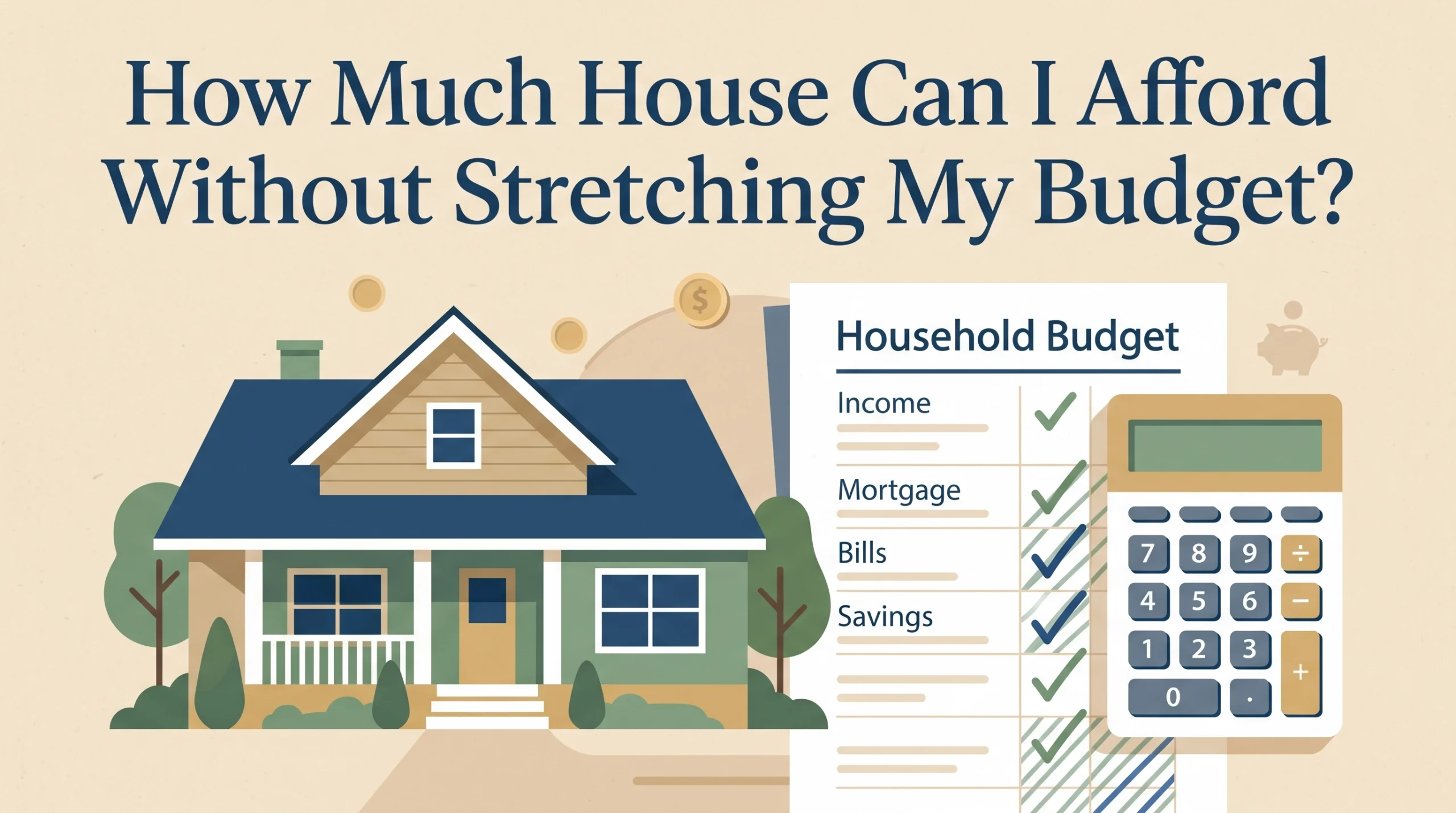

“Should I buy a house now or wait?” is one of the most common questions buyers
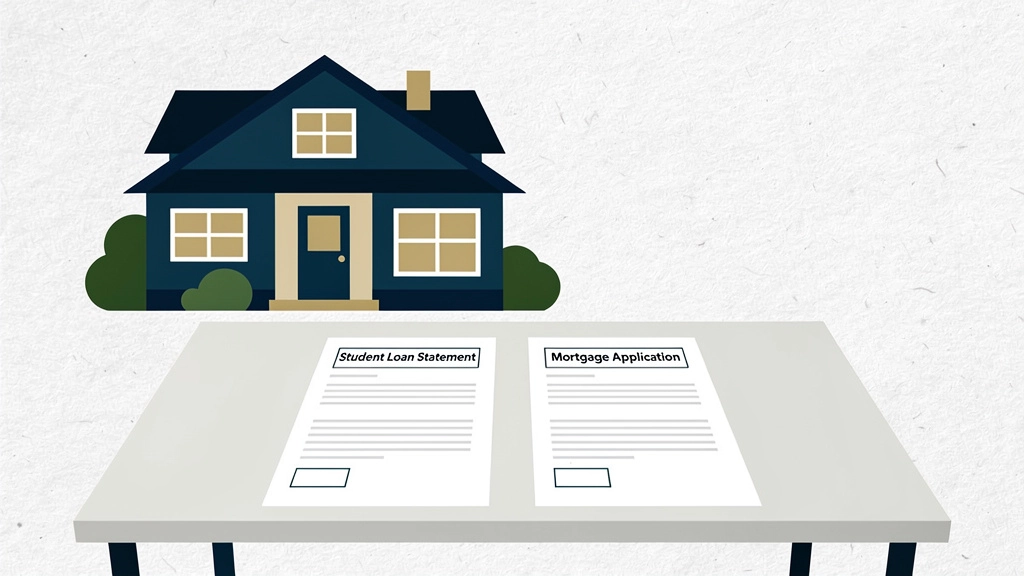
Student loan debt does not automatically prevent you from buying a house. Many buyers qualify for a mortgage while making student loan payments or using an income-driven repayment plan.
The important number is usually not the total student loan balance by itself. Lenders focus on the monthly payment that must be included with your other debts. That payment affects your debt-to-income ratio and the mortgage amount you may qualify for.
The calculation can vary by mortgage program. Understanding the rules before shopping can help you avoid an inaccurate online estimate or a surprise during underwriting.
How Student Loans Affect Mortgage Qualification
Mortgage lenders compare your qualifying monthly income with your required monthly debts. This calculation is called the debt-to-income ratio, or DTI.
Student loans may be included along with car payments, credit card minimums, personal loans, child support, and the proposed housing payment. A higher student loan payment leaves less qualifying income available for the mortgage.
Assume a buyer earns $6,000 per month before taxes. The buyer has a $500 car payment and a $300 qualifying student loan payment. Those obligations use $800 of the buyer’s monthly income before the proposed mortgage payment is added.
The loan balance still matters because certain programs use a percentage of the outstanding balance when no usable monthly payment appears. However, owing $60,000 does not automatically mean a buyer must pay off $60,000 before purchasing a home.
The Payment on Your Credit Report Matters
The lender normally begins with the student loan information shown on the credit report. This includes the outstanding balance, account status, and reported monthly payment.
When the credit report shows an actual payment greater than zero, that amount may be used for some loan programs. The lender may request a recent statement or other documentation when the reported information is missing, outdated, or inconsistent.
A problem can occur when the credit report shows a $0 payment. The loan could be deferred, in forbearance, or enrolled in a repayment plan that currently requires no payment. Mortgage guidelines do not treat every $0 payment the same way.
Do not assume that a paused student loan will be ignored. The lender may need to calculate a qualifying payment even when no payment is currently due.
Conventional Loan Rules Can Differ
Fannie Mae and Freddie Mac purchase many conventional mortgages, but their student loan guidelines are not identical.
Fannie Mae Student Loan Treatment
Under Fannie Mae’s current guidance, a lender may use the payment shown on the credit report or documented by the student loan servicer when the amount is greater than zero. A documented $0 payment under an income-driven repayment plan may also be used as $0 when the requirements are met.
For a deferred loan or loan in forbearance, Fannie Mae may require either 1% of the outstanding balance or a fully amortizing payment based on documented repayment terms. Fannie Mae explains its current treatment of student loan payments.
Freddie Mac Student Loan Treatment
Freddie Mac generally requires the lender to use the payment shown on the credit report when it is greater than zero, unless acceptable documentation supports a different amount.
When the credit report shows a $0 monthly payment, Freddie Mac generally requires 0.5% of the outstanding balance to be included. Certain exceptions may apply when documentation supports a different qualifying treatment. Freddie Mac provides its student loan requirements in Guide Section 5401.2.
These differences can affect buying power. A borrower should not assume that every conventional lender or automated underwriting system will produce the same result.
How FHA Loans Treat Student Loans
FHA loans also include student loans in the borrower’s monthly obligations. The lender may use the payment reported on the credit report or a documented actual payment when it meets FHA requirements.
When the reported payment is zero, FHA generally uses 0.5% of the outstanding student loan balance. This applies even when the loan is currently deferred.
For example, 0.5% of a $60,000 balance is $300. The lender may need to include that $300 as a monthly obligation for mortgage qualification, even if the borrower is not currently sending a $300 payment.
FHA guidelines and documentation requirements should be confirmed using the current handbook and lender requirements. HUD publishes FHA requirements in its Single Family Housing Policy Handbook.
Income-Driven Repayment Plans May Help
An income-driven repayment plan bases the required student loan payment partly on income and household information. For some borrowers, the resulting payment is much lower than a standard fully amortizing payment.
A lower documented payment may improve mortgage qualification when the selected loan program allows that amount to be used. This can be especially important for teachers, medical professionals, attorneys, and other borrowers whose student loan balances are high compared with their current income.
The repayment plan should be established and documented before the mortgage application reaches final underwriting. A pending application for a new student loan payment may not be enough. The lender usually needs evidence of the payment that is currently required.
Borrowers should also consider the long-term effect of the repayment plan. A lower student loan payment can help with mortgage qualification, but it may extend repayment or affect total interest. Mortgage approval is only one part of the financial decision.
Should You Pay Off Student Loans Before Buying?
Paying off student loans can reduce monthly debt and improve qualification. It may also simplify the household budget after closing.
The disadvantage is that a payoff can use money needed for the down payment, closing costs, repairs, moving expenses, or emergency savings. Paying down the balance may not improve qualification as much as expected if the required monthly payment stays the same.
Before sending a large payment, compare the effect of three choices. These are keeping the existing student loan payment, paying off the loan, or using the same cash toward the home purchase and reserves.
The best choice depends on how the mortgage program calculates the debt. It also depends on the amount of cash that will remain after closing.
Other Student Loan Issues to Review
Late or defaulted student loans can create a different problem than the monthly payment. Recent missed payments may affect credit scores and the lender’s evaluation of repayment history.
Federal student loan default may also affect eligibility for certain government-backed mortgages. The borrower may need to resolve the default or complete an approved rehabilitation or consolidation process before qualifying.
Cosigned student loans require careful review too. A debt may appear on your credit report even when another person makes the payments. Some mortgage programs allow the payment to be excluded when documentation shows that someone else has made the required payments for a specified period. The exact documentation and history requirements vary.
Pros and Cons of Buying With Student Loan Debt
Buying before the student loans are paid off allows you to move forward without waiting several years. It may also let you keep useful savings and begin building home equity.
The tradeoff is that student loan payments reduce monthly buying power. Carrying both debts also creates less room in the budget for repairs, savings, and unexpected expenses.
Waiting may provide time to reduce debt or improve credit. However, waiting is most useful when there is a specific plan and measurable goal, not only a belief that every student loan must disappear before homeownership is possible.
Who Is This Most Relevant For?
This issue is especially relevant for borrowers with large student loan balances, income-driven payments, deferred loans, or a $0 payment shown on the credit report. It also matters for recent graduates whose repayment terms have not been fully established.
A program comparison may help when one set of guidelines produces a much higher qualifying payment than another. The interest rate, mortgage insurance, cash needed, and complete monthly payment should still be reviewed along with the student loan treatment.
Get the Student Loan Calculation Right Early
You can buy a house with student loan debt if your income, credit, assets, monthly obligations, and mortgage program support the purchase. The key is using the correct qualifying payment from the beginning.
At Capital City Mortgage, we review student loan statements, credit reporting, and repayment status before preparing a Nebraska mortgage preapproval. We can compare options from multiple lenders and explain how each program treats the debt.
A thoroughly prepared preapproval gives you a more reliable price range and reduces the chance that a student loan calculation changes the plan after you find a home.
ask when rates are higher, home prices feel expensive, or the economy appears uncertain.
There is no single answer for every buyer. Waiting can be smart when your finances need more time. Buying can make sense when the payment fits, you plan to stay in the home, and the purchase improves your living situation.
The mistake is assuming that someone can predict the perfect time to buy. Mortgage rates, home prices, inventory, and competition can move in different directions. A better decision starts with what you can afford today and what would need to improve for waiting to pay off.
The Current Market Does Matter
Mortgage rates affect how much home fits within a monthly budget. Higher rates increase the principal and interest payment, while lower rates reduce it.
According to Mortgage News Daily, the average top-tier 30-year fixed rate increased to 6.87% on August 31, 2026. That was its highest level since June 2025, although it was close to other rates seen during the summer. Mortgage News Daily explains the August 31 rate movement.
That rate is a national market indicator, not a quote for every borrower. An actual rate depends on credit, down payment, loan program, property, occupancy, lock period, and other details.
Rates matter, but they are only one part of the decision. The purchase price, property taxes, homeowners insurance, available homes, seller concessions, and time you expect to own the property also affect whether buying makes sense.
Reasons Buying Now May Make Sense
Buying may be reasonable when you have stable income, manageable debt, adequate cash, and a total payment that fits your budget.
It can also make sense when you expect to remain in the area for several years. Buying and selling both involve costs, so a short ownership period provides less time to spread those expenses and build equity.
Your current housing situation matters too. Someone facing rising rent, limited space, a long commute, or an upcoming move may receive real value from buying. That value does not appear in an interest-rate forecast.
Current market conditions may also provide negotiating opportunities. When some buyers are waiting, sellers may be more willing to consider closing-cost credits, repairs, price reductions, or flexible closing dates. These opportunities depend on the property and local market.
Reasons Waiting May Be Better
Waiting is usually the stronger choice when the payment would strain your budget. A loan approval does not mean the payment will be comfortable after groceries, childcare, savings, utilities, maintenance, and other expenses.
More time may also help if your credit needs improvement, your income is changing, or you recently started a new job or business. Waiting can allow you to establish a clearer financial history and improve available mortgage options.
You may benefit from waiting if buying would use nearly all your savings. The down payment is not the only cash needed. Buyers should also prepare for closing costs, moving expenses, repairs, and an emergency cushion.
The Consumer Financial Protection Bureau recommends reviewing your credit, finances, budget, and loan documents before shopping. The CFPB provides a step-by-step mortgage preparation guide.
Waiting also makes sense when your plans are uncertain. If you may relocate soon, change careers, or need a different type of home within a short period, renting may provide more flexibility.
What If You Are Waiting for Lower Rates?
Waiting for a specific mortgage rate is a gamble because no one knows exactly when rates will fall or how much they will improve.
Lower rates would reduce the payment on the same loan amount. However, lower rates could also bring more buyers into the market. That may increase competition, reduce negotiating power, or place upward pressure on home prices.
A lower rate does not guarantee that the total purchase becomes less expensive. If a home’s price rises while rates fall, part of the payment savings may disappear.
Waiting has costs as well. You may continue paying rent, miss a property that meets your needs, or delay building home equity. On the other hand, waiting may allow you to save more and strengthen your financial position.
The right comparison is not “today’s rate versus a hoped-for future rate.” It is the complete cost of buying now compared with a realistic waiting scenario.
Can You Buy Now and Refinance Later?
A future refinance may reduce the payment if rates improve and the homeowner qualifies at that time. However, refinancing is not guaranteed.
The property must meet applicable value requirements. The borrower must also meet the lender’s credit, income, debt, documentation, and program standards. Closing costs may apply, and rates may not move enough to make refinancing worthwhile.
Buying should therefore make sense using the payment available today. A possible future refinance can be an added benefit, but it should not be required to make the original purchase affordable.
Compare Two Realistic Scenarios
Start with a buy-now scenario using an actual price range, realistic taxes and insurance, current mortgage pricing, and your expected down payment. Include mortgage insurance and association dues when applicable.
Then create a waiting scenario. Decide how long you would wait, how much more you expect to save, and what financial improvement you are working toward. Avoid assuming that both rates and home prices will automatically move in your favor.
For example, waiting one year may make sense if it allows you to pay off a large monthly debt, improve your credit, and build an emergency fund. Waiting without a specific goal may leave you in the same position a year later.
The comparison should answer four questions:
- Is the buy-now payment comfortable?
- How much savings will remain after closing?
- How long do you expect to own the home?
- What measurable improvement do you expect from waiting?
If the buy-now numbers work and the home fits your long-term needs, the decision does not require perfect market conditions. If the payment is uncomfortable or the plan depends on uncertain future events, waiting may be safer.
Do Not Base the Decision on Headlines Alone
National housing news can provide useful context, but real estate is local. Conditions in Lincoln, Omaha, and smaller Nebraska communities can differ from national averages.
One price range may have multiple listings and motivated sellers. Another may have limited inventory and strong competition. The condition and location of an individual property may matter more than a national housing forecast.
Headlines also tend to focus on averages. Your rate, payment, credit, taxes, insurance, and negotiating position may look different from the average borrower.
A local preapproval and property-specific payment estimate provide better information than a general headline saying it is either a good or bad time to buy.
Who Is Most Likely Ready to Buy?
Buying now may fit someone with stable income, acceptable credit, manageable debts, and enough money for closing while keeping useful savings. The buyer should also expect to remain in the home long enough for ownership to serve a practical purpose.
Waiting may fit someone whose job, location, household needs, or income is likely to change. It may also help a buyer who needs to improve credit, reduce debt, or save more before the payment becomes comfortable.
The CFPB recommends focusing on a mortgage that works with your other priorities, not simply the largest amount you qualify to borrow. Review the CFPB’s home-affordability guidance.
Make the Decision With Real Numbers
You do not need to predict the lowest mortgage rate or the perfect home price. You need to know whether buying works under today’s terms and what you would gain by waiting.
At Capital City Mortgage, we help Nebraska buyers compare current purchase options with a realistic waiting strategy. We can review the complete payment, cash to close, credit, debts, savings, and available loan programs through multiple lenders.
If buying now works without depending on a future refinance or rapid appreciation, it may be a reasonable time to move forward. If waiting will create a clear and measurable financial improvement, that can be the better plan.
Frequently Asked Questions
Can I qualify for a mortgage if I have student loans?
Yes. Student loans do not automatically prevent mortgage approval. The lender will consider the required qualifying payment along with your income, credit, other debts, assets, and the proposed housing payment.
Do deferred student loans count when buying a house?
Usually, yes. A mortgage program may require a calculated payment even when the student loan is deferred or in forbearance. The calculation depends on the loan program and available documentation.
Can a lender use my income-driven student loan payment?
It may be able to use the documented payment, depending on the mortgage program and repayment status. A $0 payment can receive different treatment under Fannie Mae, Freddie Mac, FHA, and other guidelines.
Should I pay off student loans before applying for a mortgage?
Not always. Paying them off may improve qualification, but it can reduce money available for closing and emergency savings. Compare the effect on your qualifying payment before using a large amount of cash.