
A lower mortgage rate can make refinancing look like an easy decision. However, a lower rate does not automatically mean the new loan will save money.
Refinancing replaces your current mortgage with a new one. The new loan may have closing costs, a different repayment term, and a new amortization schedule. The best way to evaluate the choice is to compare the full cost, monthly savings, break-even point, and long-term effect.
What Is a Refinance Break-Even Point?
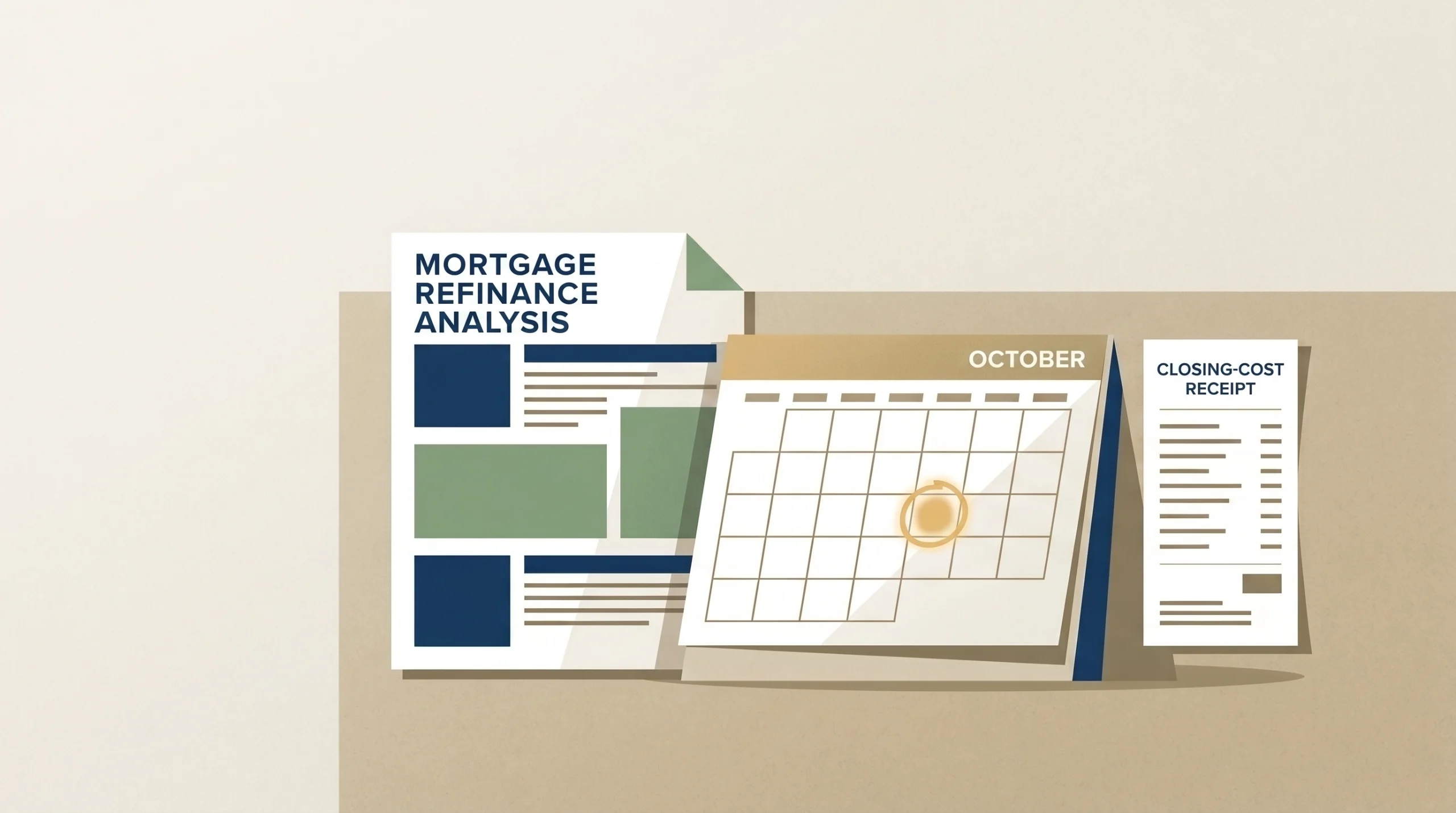
The break-even point is the amount of time needed for the monthly savings to recover the cost of refinancing. It helps answer a basic question: Will you keep the new loan long enough for the savings to exceed the expense?
The calculation is straightforward:
Total refinance costs ÷ monthly savings = break-even period in months
Assume refinancing costs $4,800 and lowers the principal and interest payment by $200 per month. Dividing $4,800 by $200 gives a break-even period of 24 months.
If you expect to sell the home or refinance again before then, the transaction may not produce meaningful savings. If you expect to keep the loan much longer, the refinance could provide a stronger benefit.
Which Costs Should You Include?
Include lender charges, title services, recording fees, appraisal or valuation costs, mortgage insurance changes, and any discount points paid to obtain the rate. Some expenses shown at closing are not true costs of refinancing.
Prepaid interest and new escrow deposits may increase the cash needed at closing, but they are different from lender and third-party charges. You may receive the remaining balance from your old escrow account after that mortgage is paid off.
The Consumer Financial Protection Bureau explains that refinancing can involve many of the same steps and costs as the original mortgage. Review the Loan Estimate carefully so you understand which amounts are fees, prepaid expenses, escrow deposits, and payoff adjustments.
Calculate the Real Monthly Savings
The monthly savings should be based on comparable payments. If the refinance removes mortgage insurance, include that reduction. If property taxes or homeowners insurance changed, separate those items because refinancing does not create that savings.
For example, suppose the current principal, interest, and mortgage insurance total $2,300. The comparable amount on the new loan is $2,050. The true monthly reduction would be $250, even if changes to taxes or insurance make the total payment look different.
Also check whether the lower payment comes from a lower rate or a longer term. The CFPB advises homeowners to understand how much of a payment reduction comes from the interest rate and how much comes from extending the repayment period.
A Lower Payment Can Still Cost More Over Time
Assume a homeowner has 22 years remaining on the current mortgage and refinances into a new 30-year loan. The new payment may be lower because the balance is spread across eight additional years.
That may improve monthly cash flow, but it can also increase the total interest paid. A homeowner could instead consider a 20-year term, a shorter term, or a 30-year mortgage with voluntary extra principal payments.
The right choice depends on the goal. Someone who needs monthly payment relief may value cash flow more than the earliest payoff date. Someone approaching retirement may place greater value on paying the mortgage off sooner.
Do You Need a Specific Rate Drop?
There is no universal rule that says a mortgage rate must fall by a certain percentage before refinancing makes sense. Loan balance, closing costs, remaining term, mortgage insurance, credit, and expected time in the home all affect the result.
A small rate reduction on a large loan could create meaningful savings. A larger rate reduction on a small balance may not recover the closing costs quickly.
Instead of waiting for a specific rate, request a complete comparison. Review the new payment, cash needed, loan balance, payoff date, total costs, and break-even period.
Points and Lender Credits Change the Calculation
Discount points are upfront charges used to obtain a lower rate. Paying points increases the cost of refinancing but may increase the monthly savings.
Calculate a separate break-even point for the points. If paying an additional $2,400 lowers the payment by another $40 per month, it takes 60 months to recover that added expense.
A lender credit works in the opposite direction. It can reduce closing costs in exchange for a higher rate. This may work well when the homeowner expects to keep the loan for a shorter period or wants to preserve cash.
Ask to compare options with and without points or credits. The lowest rate is not always the least expensive choice.
What Does “No-Closing-Cost Refinance” Mean?
A no-closing-cost refinance does not mean the transaction has no costs. The lender may cover eligible charges through a lender credit tied to a higher interest rate. In other cases, costs may be added to the new loan balance when permitted.
A higher rate can reduce the monthly benefit. Adding costs to the loan also increases the amount owed and means interest may be charged on those costs.
A low-cost refinance can still be useful, especially if it reduces the payment without requiring substantial cash. Compare it with a standard-cost option over the period you expect to keep the mortgage.
Government Streamline Refinance Options
Homeowners with government-backed loans may have access to streamlined refinance programs. These programs can reduce some documentation or appraisal requirements, but they are not automatic approvals and they are not free loans.
FHA Streamline Refinance
An FHA streamline refinance is available for certain existing FHA-insured mortgages. It generally focuses on the mortgage payment history and requires the transaction to provide an eligible benefit. Credit, income, appraisal, seasoning, and documentation requirements can vary based on the lender and transaction.
VA Interest Rate Reduction Refinance Loan
A VA Interest Rate Reduction Refinance Loan, commonly called an IRRRL, is designed for eligible borrowers with an existing VA-backed mortgage. The Department of Veterans Affairs explains that an IRRRL may reduce the payment or make the payment more stable.
VA rules include seasoning, rate, payment, and cost-recoupment requirements. The lender must also determine that the borrower and transaction meet applicable eligibility standards.
USDA Streamlined Refinance
Eligible homeowners with an existing USDA loan may have access to streamlined or streamlined-assist refinance options. These programs have their own payment-history, benefit, loan, and property requirements.
A streamline option may reduce paperwork, but homeowners should still compare the new rate, payment, closing costs, loan balance, and remaining term.
Pros and Cons of Refinancing
Refinancing may reduce the monthly payment, lower the interest cost, shorten the loan term, remove certain mortgage insurance, or provide more stable terms. It can also help homeowners move from an adjustable-rate mortgage to a fixed-rate loan.
The disadvantages include closing costs, a possible increase in the loan balance, and the risk of extending repayment. The homeowner must qualify under the selected program, and a new appraisal or other documentation may be required.
Who Should Consider Refinancing?
A refinance may be most relevant for homeowners who can lower their borrowing cost, remove mortgage insurance, shorten the term, or improve an adjustable loan structure. It can also help when the monthly savings recover the costs well before the homeowner expects to sell or repay the loan.
It may be less useful for someone planning to move soon, holding a favorable existing rate, or facing a long break-even period. Homeowners close to paying off the mortgage should pay special attention to the effect of restarting the term.
Compare the Loan, Not Only the Rate
Refinancing is worth considering when it improves the mortgage in a measurable way and supports the homeowner’s plans. The interest rate matters, but the closing costs, payment, loan balance, term, and break-even point matter too.
At Capital City Mortgage, we help Nebraska homeowners compare refinance options from multiple lenders. We explain the costs, monthly savings, break-even period, and long-term effect so you can decide whether replacing the current mortgage provides a real benefit.
Frequently Asked Questions
How do I calculate the break-even point on a refinance?
Divide the total refinance costs by the monthly savings. If the costs are $4,800 and the monthly savings are $200, the break-even period is 24 months.
Is refinancing worth it if I plan to move soon?
It may not be if you expect to sell before the monthly savings recover the refinance costs. Compare the break-even period with your expected time in the home.
Does a no-closing-cost refinance really have no costs?
No. The lender may cover eligible costs through a credit tied to a higher interest rate, or certain costs may be added to the loan balance when permitted.
Can I use a streamline refinance for an FHA, VA, or USDA loan?
Possibly. FHA, VA, and USDA offer refinance options for certain existing government-backed loans, but eligibility, seasoning, payment history, benefit, and lender requirements apply.