
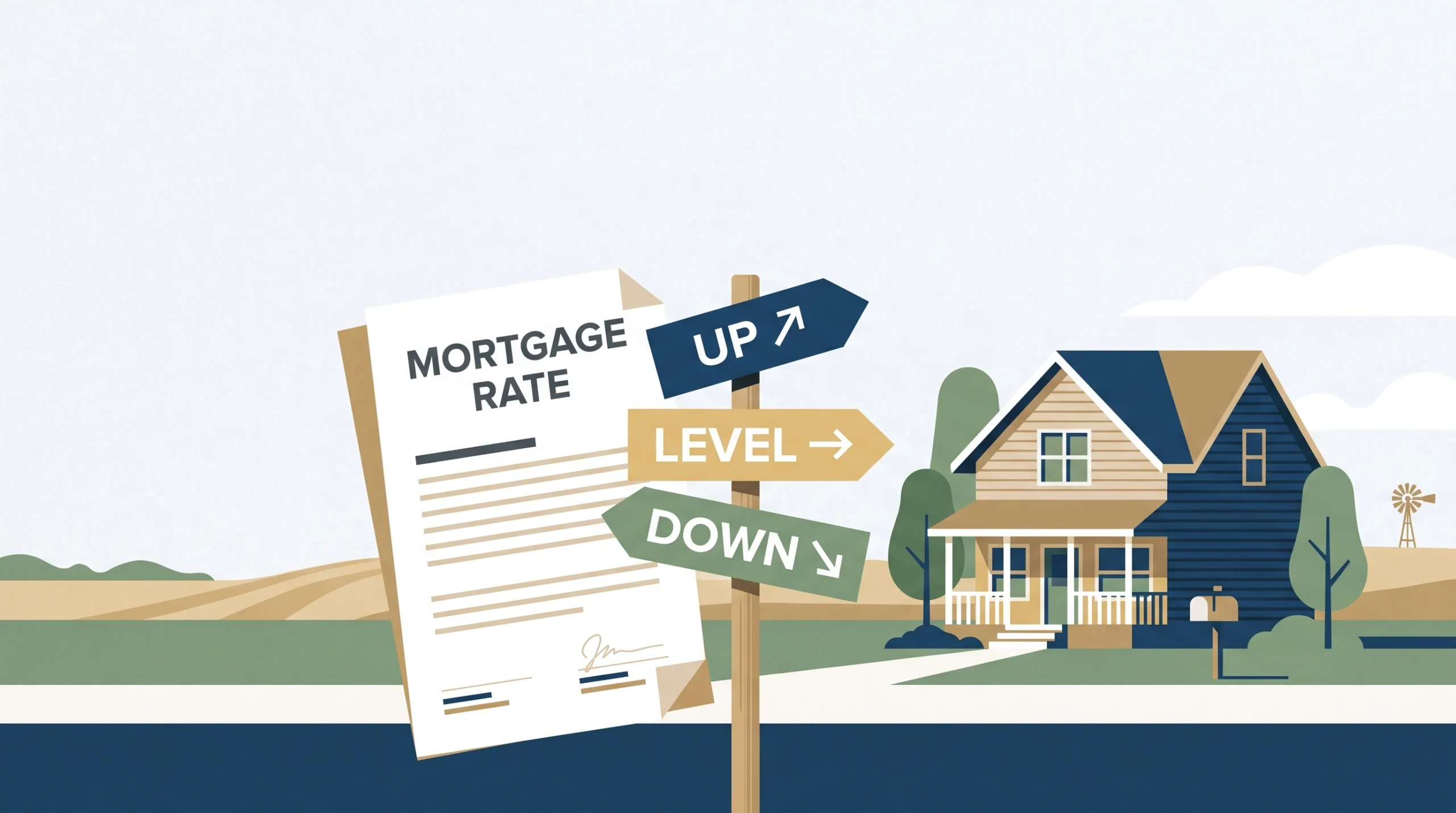
Waiting for a lower mortgage rate sounds reasonable. A lower rate can reduce the monthly payment and the amount of interest paid over time. The problem is that no one knows when rates will fall, how far they might fall, or what home prices will be when they do.
Rates could be lower in two years, three years, or two weeks. They could also rise or stay near the same level. Instead of building your home purchase around one prediction, consider what would happen under all three possible rate directions.
Start With the Payment You Can Afford Today
The first question should not be where rates might go. It should be whether you can comfortably afford the home and mortgage available today.
Review the full payment, including principal, interest, property taxes, homeowners insurance, mortgage insurance, and association dues when applicable. The Consumer Financial Protection Bureau recommends using a realistic interest rate and complete housing payment when setting a homebuying budget.
A future refinance should never be required to make the current payment affordable. Refinancing may become available later, but it is not guaranteed. If today’s payment would stretch the budget too far, waiting and improving your finances may be the better choice.
If the payment is comfortable and you expect to own the home long enough for the purchase to make sense, consider the three directions rates could take.
Scenario 1: Mortgage Rates Go Up
If mortgage rates rise after you buy, purchasing at today’s rate may look like the better decision. You would have secured financing before borrowing became more expensive.
Higher rates can reduce demand because fewer buyers can qualify for the same price. That may slow home-price growth or give buyers more negotiating power. However, lower demand does not guarantee that prices will fall enough to offset the higher mortgage payment.
Assume you wait for a better rate, but rates move higher instead. You may need to lower your price range, increase the down payment, or accept a larger monthly payment. You might also spend another year paying rent without building equity in a property.
Buying before rates rise removes that future rate risk if you use a fixed-rate mortgage. Your principal and interest payment remains scheduled according to the loan terms, although taxes, insurance, and other housing expenses can still change.
Scenario 2: Mortgage Rates Stay Near the Same Level
Rates do not always make a large move. They can remain within a general range for months or fluctuate without creating a meaningful long-term change.
If rates are similar next year, waiting may not provide the payment improvement you expected. Meanwhile, the home you want could cost more. Home prices do not rise every year or in every area, but long-term price trends can make waiting more expensive when demand remains steady and housing supply is limited.
For example, a buyer who waits for a lower rate may find that rates are nearly unchanged while a $325,000 home now costs $335,000. That buyer may need more money for the down payment and could borrow more even though the rate did not improve.
The opposite is also possible. Prices could remain flat or decline. The point is not that homes always appreciate. It is that waiting for rates also means accepting uncertainty about prices, inventory, rent, and competition.
The Federal Housing Finance Agency House Price Index tracks changes in home values across the country. Historical data can show past cycles, but it cannot tell an individual buyer what a specific Nebraska property will be worth in the future.
Scenario 3: Mortgage Rates Go Down
If rates fall after you purchase, you may be able to refinance. This could reduce the monthly payment, shorten the mortgage term, or change the loan structure.
Buying now may also let you purchase at today’s home price and begin building equity through principal payments. The property could appreciate, although appreciation is never guaranteed. If home prices rise while rates fall, the buyer who waited could receive a lower rate but pay more for the house.
There may also be more competition when rates decline. Lower payments can bring additional buyers into the market. Popular properties may receive more offers, sellers may become less willing to negotiate, and prices may respond to stronger demand.
This creates an important distinction. You may be able to refinance a mortgage rate, but you cannot refinance the original purchase price. That does not mean buying now is always better. It means both the rate and the price should be considered.
Do Not Assume You Will Be Able to Refinance
“Buy now and refinance later” and “Date the rate and marry the house” should be treated as an opportunity, not a promise. A refinance creates a new mortgage, and eligibility depends on the loan program and your circumstances at that time.
For a standard refinance, the lender may review your income, employment, credit, debts, property value, equity, and payment history again. A drop in rates does not guarantee that you will qualify or that the savings will be large enough to support the cost.
Government-backed loans may offer streamlined refinance options. FHA borrowers may qualify for an FHA Streamline Refinance. Eligible VA borrowers may use a VA Interest Rate Reduction Refinance Loan, commonly called an IRRRL. USDA borrowers may have access to one of USDA’s streamlined refinance programs.
These programs can require less documentation and may not require a traditional appraisal, depending on the program and transaction. However, they still have eligibility rules. The existing mortgage generally must be the same type of government-backed loan, the borrower must meet applicable payment-history requirements, and the refinance must provide the required financial benefit. Costs, seasoning periods, occupancy rules, and lender requirements may also apply.
A streamline refinance does not mean the transaction is automatic or free. Closing costs and fees may still apply, and borrowers must qualify under the current program rules. The CFPB explains that a refinance replaces the existing mortgage with a new loan and that borrowers should determine whether the lower payment comes from the rate, a longer term, or both.
Before refinancing, compare the cost with the monthly savings. If the refinance costs $4,000 and saves $160 per month, the simple break-even period would be 25 months. The homeowner would generally need to keep the new loan beyond that point to recover the cost through monthly savings.
What History Can and Cannot Tell Us
Past mortgage cycles show that rates rise, fall, and spend long periods moving within a range. They can also move quickly when inflation expectations, Federal Reserve policy, employment data, or bond-market conditions change.
The CFPB’s research on the effects of changing mortgage rates shows how a large rate increase can reduce affordability and change housing supply. However, knowing what happened in a prior cycle does not reveal the timing of the next move.
A rate forecast can be useful background information. It should not be the only reason to buy or wait.
Pros and Cons of Buying Before Rates Fall
Buying now can secure today’s home price and current financing terms. It may allow you to stop renting, begin paying down principal, and purchase before lower rates bring more buyers into the market. If rates fall enough later, refinancing may provide another opportunity.
The main risk is that the current payment could be higher than you want. Home values could also fall, and a future refinance might not be available or worthwhile. Buying and refinancing both involve transaction costs, so a short ownership period can make the strategy less attractive.
Waiting can provide time to save more, reduce debt, improve credit, or build a stronger emergency fund. It can also help if your job, household size, or preferred location is likely to change soon. The tradeoff is that rates or prices may move against you while you wait.
Who Should Consider Buying Now?
Buying now may make sense when the payment is comfortable, your income is stable, you have enough money for closing and reserves, and you expect to stay in the home for several years. It is also important to find a property that fits your needs instead of buying solely because you are worried about future rates.
Waiting may be smarter when the payment depends on a future refinance, your savings would be nearly depleted, your employment is uncertain, or you expect to move soon. Improving credit or reducing monthly debt may create a larger benefit than trying to predict the market.
Make the Decision Using Today’s Numbers
There is no crystal ball for mortgage rates. If rates rise, buying today may look favorable. If rates remain similar, waiting may not improve the payment and the home could cost more. If rates fall, a qualified homeowner may have an opportunity to refinance after purchasing at today’s price.
The safest approach is to buy only when the current payment works without depending on appreciation or refinancing. Then treat any future rate improvement as a possible benefit.
At Capital City Mortgage, we help Nebraska buyers compare payments, cash needed, loan options, and realistic rate scenarios before making an offer. We work with multiple lenders, prepare thorough preapprovals, and explain the numbers clearly so you can make a decision based on your finances rather than a market prediction.
Frequently Asked Questions
Should I wait for mortgage rates to drop before buying?
Waiting may make sense if today’s payment is not affordable or you need time to improve your finances. If the payment works and you are ready to own a home, waiting only for a predicted rate drop creates the risk that rates or home prices could rise.
Can I refinance if mortgage rates fall after I buy?
You may be able to refinance, but approval is not guaranteed. Your income, credit, debts, equity, property value, loan program, closing costs, and expected savings will determine whether refinancing is available and worthwhile.
Do home prices fall when mortgage rates rise?
Not always. Higher rates can reduce buyer demand, but home prices also depend on inventory, employment, population trends, construction, and local market conditions. Prices can rise, remain flat, or decline during a higher-rate period.
Is it better to buy now and refinance later?
It can be a reasonable strategy when today’s payment is comfortable without refinancing. A future refinance should be viewed as a possible benefit, not as a requirement for making the home affordable.