
A spouse may be asked to sign mortgage documents even when their income and credit were not used to qualify for the loan. This often causes confusion at closing because signing a document can feel like accepting responsibility for the debt.
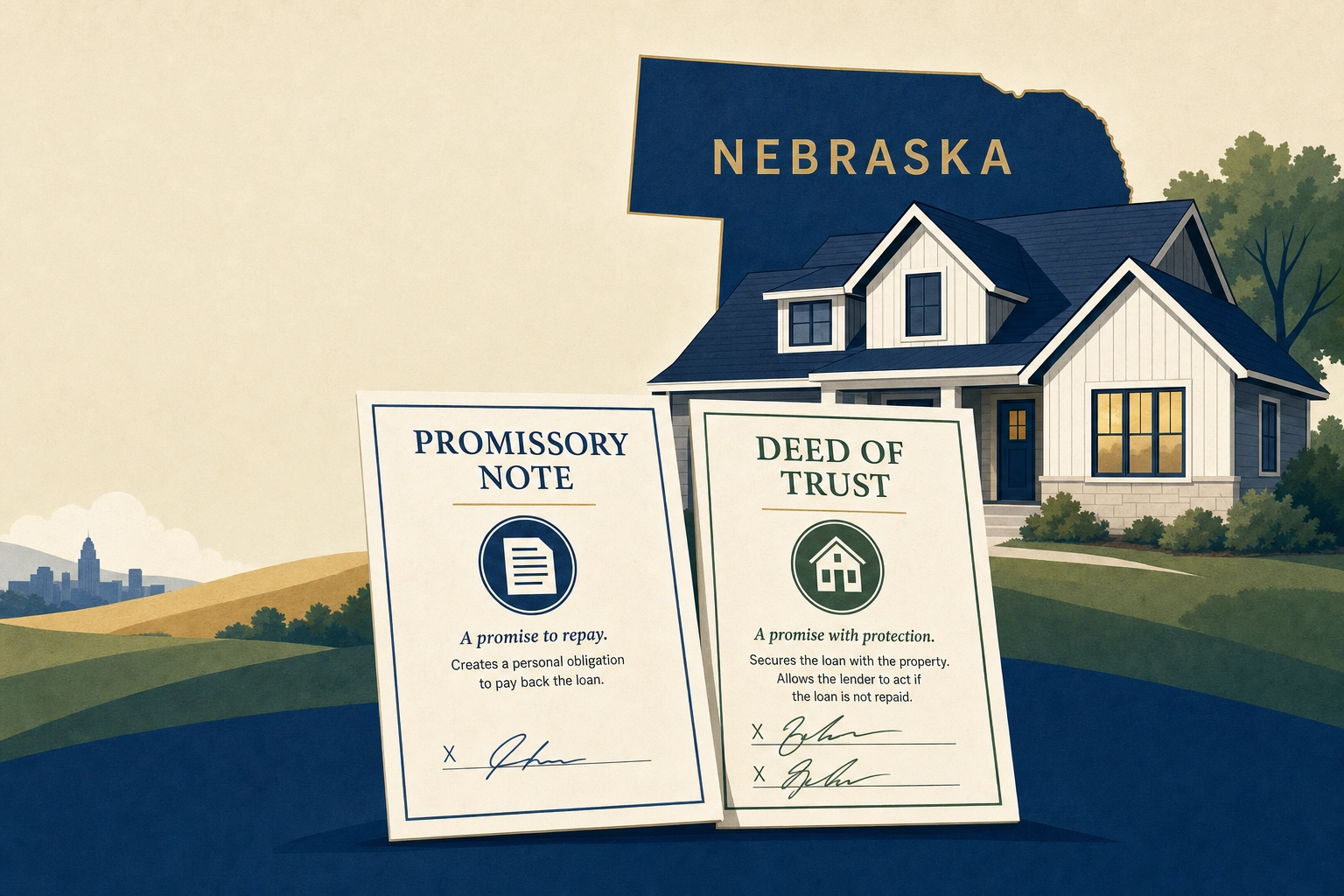
The key is understanding which document the spouse is signing. The promissory Note creates the obligation to repay the loan. The mortgage or Deed of Trust places the lien against the property.
A non-borrowing spouse may need to sign the security documents without signing the Note. In that situation, the spouse is helping create a valid lien but is generally not becoming personally responsible for repaying the mortgage.
Four Roles That Are Often Confused
A mortgage transaction may involve borrowers, property owners, spouses, and non-occupying borrowers. One person can fill more than one role, but the roles do not always match.
A borrower applies for the loan and signs the Note. A co-borrower also signs the Note and shares responsibility for the debt. A titled owner has an ownership interest in the property but may or may not be a borrower.
A non-borrowing spouse is married to a borrower but is not using their income or credit to qualify. State law, ownership, homestead rights, and the way title is held may still require that spouse to sign certain documents.
The Note Creates the Repayment Obligation
The promissory Note is the borrower’s written promise to repay the mortgage loan. It contains the loan amount, interest rate, payment terms, maturity date, and other repayment obligations.
The people who sign the Note are personally responsible for the debt. If payments are missed, the lender may report the delinquency under those borrowers and pursue the remedies allowed by the loan documents and applicable law.
Fannie Mae’s current guidelines state that an individual whose credit, income, assets, or liabilities were used to qualify must sign the Note. A person who owns part of the property but whose credit was not used may need to sign the security instrument without signing the Note. Fannie Mae explains the signature requirements for mortgage Notes.
Signing a Deed of Trust does not automatically make someone a borrower. The Note is the document that normally creates personal responsibility for repayment.
The Deed of Trust Creates the Lien
Nebraska commonly uses a Deed of Trust as the mortgage security instrument. It connects the debt to the property and gives the lender the right to enforce the lien if the loan is not paid as agreed.
Everyone with an ownership interest may need to sign the Deed of Trust so the lien attaches to the complete property. Otherwise, the lender could receive a lien against only part of the ownership interest or face a problem enforcing the lien.
Freddie Mac’s current guide states that the security instrument must be signed by all individuals with an ownership interest in the mortgaged property. Freddie Mac provides its current security-instrument requirements.
The Deed of Trust may use the word “Borrower” when referring to everyone signing the document. This document wording can be confusing. A non-borrowing spouse can be called a borrower within the security instrument while still not being a borrower under the Note.
Why Nebraska Homestead Rights Matter
Nebraska law provides special protection for a married person’s homestead. In many situations, a homestead cannot be conveyed or encumbered without the signatures and acknowledgments required from both spouses.
The Nebraska Supreme Court has explained that an instrument attempting to encumber a married person’s homestead may be invalid when it is not properly executed and acknowledged by both spouses. Nebraska Revised Statute 40-104 and its case annotations explain these homestead requirements.
This does not mean every spouse must sign every mortgage document in every transaction. Purchase-money mortgages, property use, title, occupancy, and other circumstances may affect the requirements.
The lender and title company review the complete situation to determine which signatures are needed. Their goal is to make sure the lender receives a valid first lien and the title policy provides the expected coverage.
Individual Credit Is Still Allowed
A married person can generally apply for mortgage credit in their own name. A lender cannot require a spouse to become a co-borrower solely because the applicant is married.
The Consumer Financial Protection Bureau explains that an individually qualified applicant generally cannot be required to have a spouse co-sign. A spouse may still need to sign documents that make the property available to satisfy the debt, create a valid lien, or allow clear title to pass. The CFPB explains the difference between co-signing and signing property documents.
Federal fair-lending rules also generally prevent a creditor from requiring an individually qualified applicant’s spouse to sign the Note when signing only the security agreement is enough to create the lien. The CFPB’s Regulation B commentary explains these spousal-signature rules.
The spouse’s signature should be limited to the documents needed for their ownership, homestead, or property rights unless that person also applied for the loan.
Which Documents Might a Non-Borrowing Spouse Sign?
The exact package varies, but a non-borrowing spouse may be asked to sign the Deed of Trust, applicable riders, title documents, homestead documents, or documents confirming how ownership is held.
On certain refinances, home-equity loans, and other non-purchase transactions involving a principal residence, an owner may also have a right to cancel the transaction. Federal rules generally give each consumer whose ownership interest is subject to the security interest a right of rescission when the transaction qualifies. The CFPB explains which property owners receive rescission rights.
A non-borrowing spouse should not normally sign the Note unless they are also accepting responsibility for the loan. Closing documents should clearly show the capacity in which each person is signing.
Title and the Mortgage Are Different
Title determines who owns the property. The mortgage application determines whose qualifications are used for the loan. The Note determines who owes the money, and the Deed of Trust determines which property secures the debt.
A spouse can sometimes be on title without being on the Note. A borrower can also qualify individually while a spouse signs documents needed to protect the lender’s lien.
Title wording such as “a married person as sole and separate property” does not always eliminate every spousal signature. Marital status, homestead rights, occupancy, prior ownership, divorce filings, and title requirements may still need to be addressed.
A pending divorce does not make someone legally unmarried. Until the divorce is final and property rights are resolved, the lender and title company may still require documents or signatures based on the current legal status.
Does Signing Put the Spouse’s Credit at Risk?
A spouse who does not sign the Note is generally not personally liable for the mortgage debt. The loan would not normally appear as that person’s mortgage account solely because they signed the security instrument.
However, the property remains subject to the lien. If the borrower does not make the payments, foreclosure could affect the spouse’s ownership or homestead interest even though the spouse was not personally required to make the payments.
That distinction is important. The spouse may not owe the lender money personally, but their interest in the property can still be affected by the loan.
Pros and Cons of Using One Borrower
Applying with one spouse can be useful when that person qualifies independently and the other spouse has lower credit, significant debts, or complicated income. It may create a cleaner application and prevent unused financial information from affecting the underwriting decision when program rules allow it.
The limitation is that only the borrower builds mortgage-payment history on that loan. The borrower also carries the personal repayment obligation alone. Ownership, estate planning, divorce, and future sale questions should be reviewed separately from loan qualification.
The strongest structure depends on both the mortgage and the household’s long-term plans.
Who Is This Most Relevant For?
This issue is most relevant when one spouse qualifies for the mortgage alone but the couple is married, occupies the property together, or plans to place both spouses on title. It also matters when spouses are separated, going through a divorce, or holding property as one spouse’s sole and separate property.
Questions about loan liability should be directed to the lender. Questions about ownership, marital rights, title, or the legal effect of a document should be directed to the title company or a qualified attorney.
Understand the Signature Before Closing
A spouse’s name appearing on several closing documents does not automatically mean that person is borrowing the money. The most important question is whether the spouse is signing the Note or only documents connected with the property and lien.
At Capital City Mortgage, we explain the mortgage documents and signing roles before closing whenever possible. We also coordinate with the Nebraska title company so borrowers and non-borrowing spouses know which documents they will sign and why.
Clear expectations before closing prevent a routine signature requirement from becoming a last-minute concern.
Frequently Asked Questions
Does signing a Deed of Trust make my spouse responsible for the mortgage?
No, not by itself. Personal responsibility for repaying the mortgage normally comes from signing the promissory Note. The Deed of Trust gives the lender a lien against the property.
Why does my spouse have to sign if they are not on the loan?
The signature may be needed to address ownership or homestead rights and create a valid lien against the property. The exact requirement depends on state law, title, occupancy, and the transaction.
Will a non-borrowing spouse’s credit affect mortgage approval?
Generally, no, when the spouse is not applying and their income or credit is not being used. Requirements can vary based on the loan program, property rights, and applicable law.
Can my spouse be on title without being on the mortgage Note?
Often, yes. A spouse may own an interest in the property and sign the security instrument without signing the Note or becoming personally responsible for the loan.