
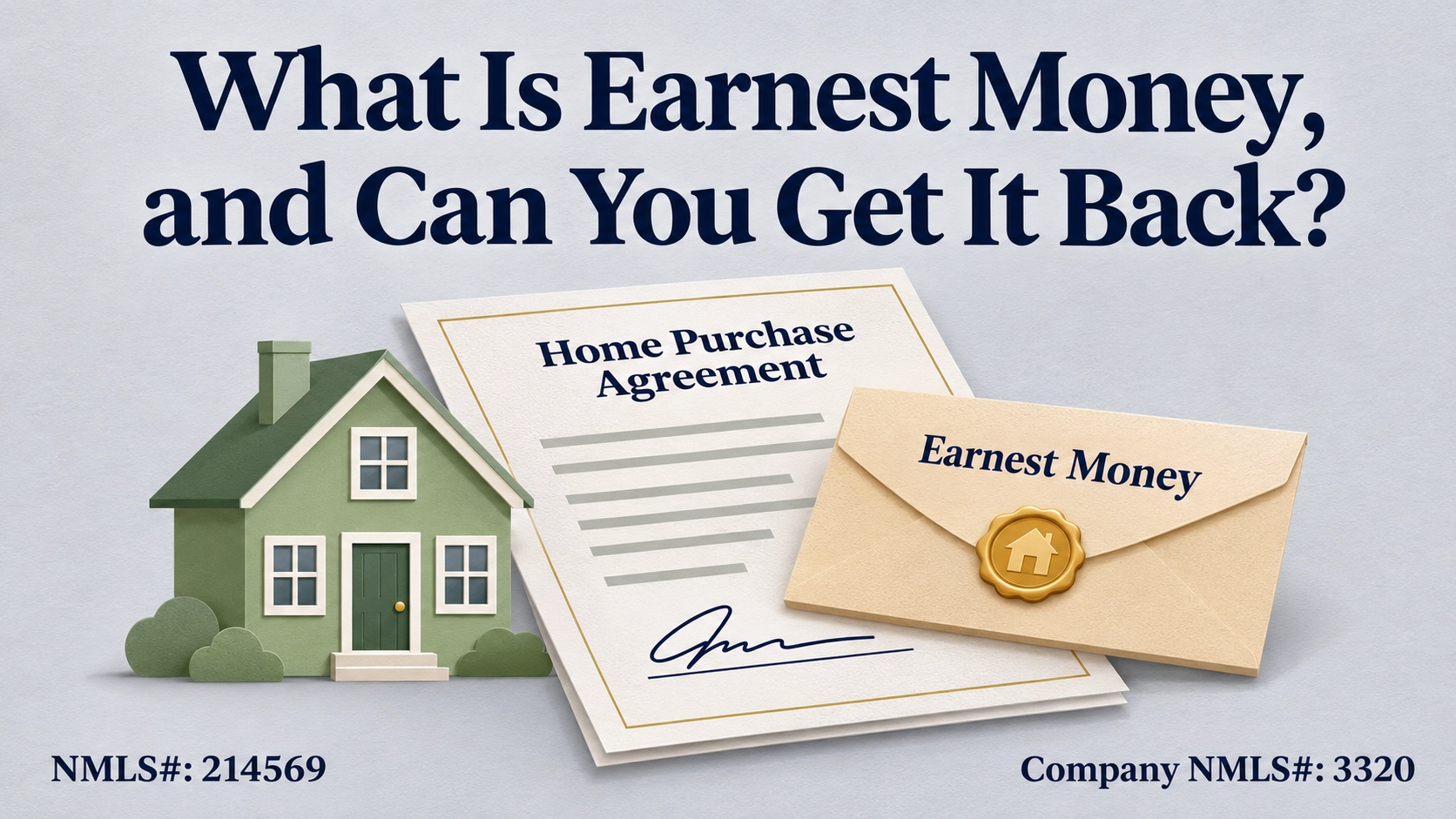
Earnest money is a deposit a homebuyer provides after a seller accepts the purchase offer. It shows the seller that the buyer intends to follow through with the transaction. The money is usually held by a real estate brokerage, title company, closing company, or another party named in the purchase agreement.
The deposit is not an extra charge added to the price of the house. If the purchase closes, the earnest money is normally credited toward the buyer’s required cash at closing. If the transaction does not close, who receives the money depends on the purchase contract and why the deal ended.
Earnest Money Is Not the Down Payment
Earnest money and a down payment serve different purposes. Earnest money is delivered shortly after the offer is accepted. The down payment is the portion of the purchase price the buyer pays at closing rather than finances with the mortgage.
For example, a buyer may make an earnest money deposit when the contract is signed. At closing, that deposit is shown as a credit and reduces the remaining amount the buyer must bring. It can be applied toward the down payment, closing costs, or other required funds.
The National Association of Realtors explains that earnest money is a good-faith deposit and is different from the buyer’s down payment. nar.realtor The purchase agreement should identify the amount, the deadline for delivering it, and who will hold the funds.
How Much Earnest Money Do You Need?
There is no single earnest money amount required for every Nebraska home purchase. The amount is negotiated between the buyer and seller. Local practices, the home’s price, competing offers, and the strength of the overall offer can all affect the decision.
A larger deposit may show the seller that the buyer is serious. However, offering more earnest money also puts more of the buyer’s cash at risk if the buyer later breaches the contract. The strongest offer is not always the one with the largest deposit.
Buyers should decide on an amount with their real estate agent after reviewing the specific transaction. The mortgage lender does not usually set the earnest money amount, but the lender will need to document where the funds came from.
Can You Get Your Earnest Money Back?
Earnest money may be refundable when the buyer cancels for a reason allowed by the purchase agreement. These protections are commonly called contingencies. The buyer must usually follow the contract’s deadlines and notice requirements.
The Nebraska Real Estate Commission advises buyers to understand that an offer becomes a contract when accepted and to seek guidance from a real estate licensee or attorney when they have questions about its terms. Nebraska Real Estate Commission A mortgage pre-approval does not replace a careful review of the purchase agreement.
Financing contingency
A financing contingency may protect the buyer if the required mortgage cannot be obtained. The language may identify the loan type, loan amount, interest rate limit, application deadline, or approval deadline.
This protection is not unlimited. A buyer who fails to apply on time, does not provide requested documents, or creates a new qualification problem may not receive the same protection. For example, financing a vehicle after the offer is accepted could affect the mortgage and create a contract dispute.
Appraisal contingency
An appraisal contingency may provide options when the home appraises below the purchase price. Depending on the contract, the buyer may be able to renegotiate, bring additional cash, challenge the appraisal, or cancel and request the deposit back.
A low appraisal does not automatically cancel the purchase agreement. Buyers should review the contract before deciding how to respond. Appraisal-gap language or a waived appraisal contingency may reduce the buyer’s protection.
Inspection contingency
An inspection contingency may allow the buyer to inspect the property and respond within a specific period. The buyer may be able to request repairs, renegotiate the price, accept the property, or terminate the contract.
The deadline matters. If the buyer misses the inspection period or does not give notice correctly, the right to cancel may expire. Inspection terms can vary widely, so buyers should not assume every contract provides the same options.
Title or property-related contingency
A purchase agreement may also address title problems, property condition disclosures, homeowners association records, insurance availability, or the sale of the buyer’s current home. If an unresolved issue falls within a written contingency, the buyer may have a right to cancel.
The exact result depends on the contract. Verbal promises from a seller or agent should not replace written terms.
When Can a Buyer Lose Earnest Money?
A buyer may risk losing the deposit by backing out for a reason that is not protected by the contract. This may happen when the buyer changes their mind after the contingency periods have expired or fails to close despite being able to complete the purchase.
Missing important deadlines can also create problems. Buyers should track the financing, appraisal, inspection, and closing dates from the day the offer is accepted. A good real estate agent and mortgage team will help keep those deadlines visible.
The party holding the money may not be able to release it immediately when the buyer and seller disagree. The contract, written release instructions, and applicable law determine how a dispute is handled. A real estate attorney may be needed when the parties cannot agree.
Should You Offer More Earnest Money?
A larger deposit can make an offer look stronger because the seller sees that the buyer has meaningful money committed to the transaction. This may help when several buyers are competing for the same property.
The drawback is greater financial exposure. The buyer may also have less cash available for the home inspection, appraisal, down payment, closing costs, or emergency savings. Buyers should not offer a larger deposit than they can safely provide.
A thoroughly prepared mortgage pre-approval can strengthen an offer without putting extra cash at risk. It shows that the buyer’s credit, income, assets, and loan options have received a meaningful review.
Protect Your Deposit From Wire Fraud
Never send earnest money using instructions received through an unexpected email without verifying them. Real estate and title company email accounts can be impersonated. A fraudulent message may look nearly identical to a legitimate request.
Call the title company, brokerage, or closing company using a trusted phone number before sending a wire. Confirm the account information verbally. Do not use the phone number contained in the unverified wiring email.
Who Should Pay the Closest Attention?
Earnest money is especially important for first-time buyers and buyers making offers in a competitive market. It also matters when a buyer must sell another home, has limited cash reserves, or needs a specific mortgage program to qualify.
Buyers using FHA, VA, USDA, conventional, or down payment assistance financing should make sure the financing terms in the contract match the actual loan plan. Changing programs after the offer is accepted may affect contract deadlines, seller credits, appraisal requirements, or the closing date.
Understand the Contract Before Sending Money
Earnest money can strengthen an offer, but it is still the buyer’s money. The safest approach is to understand the amount, delivery deadline, contingencies, and cancellation rules before signing the purchase agreement.
Capital City Mortgage helps Nebraska buyers prepare their financing before they make an offer. We review documents, compare options from multiple lenders, and provide thoroughly prepared pre-approvals. Strong communication between the buyer, lender, and real estate agent can reduce surprises and help protect the transaction from start to closing.
Frequently Asked Questions
Is earnest money required when buying a house?
Earnest money is common, but the amount and whether it is required depend on the purchase agreement and negotiations between the buyer and seller.
Does earnest money count toward the down payment?
Yes. When the purchase closes, earnest money is normally credited toward the buyer’s required funds, which may include the down payment and closing costs.
Can I lose earnest money if my mortgage is denied?
Possibly. A financing contingency may protect the deposit, but the result depends on the contract language, deadlines, notice requirements, and reason the financing failed.
Who holds the earnest money deposit?
The purchase agreement identifies who will hold the deposit. It may be a real estate brokerage, title company, closing company, attorney, or another authorized escrow holder.