

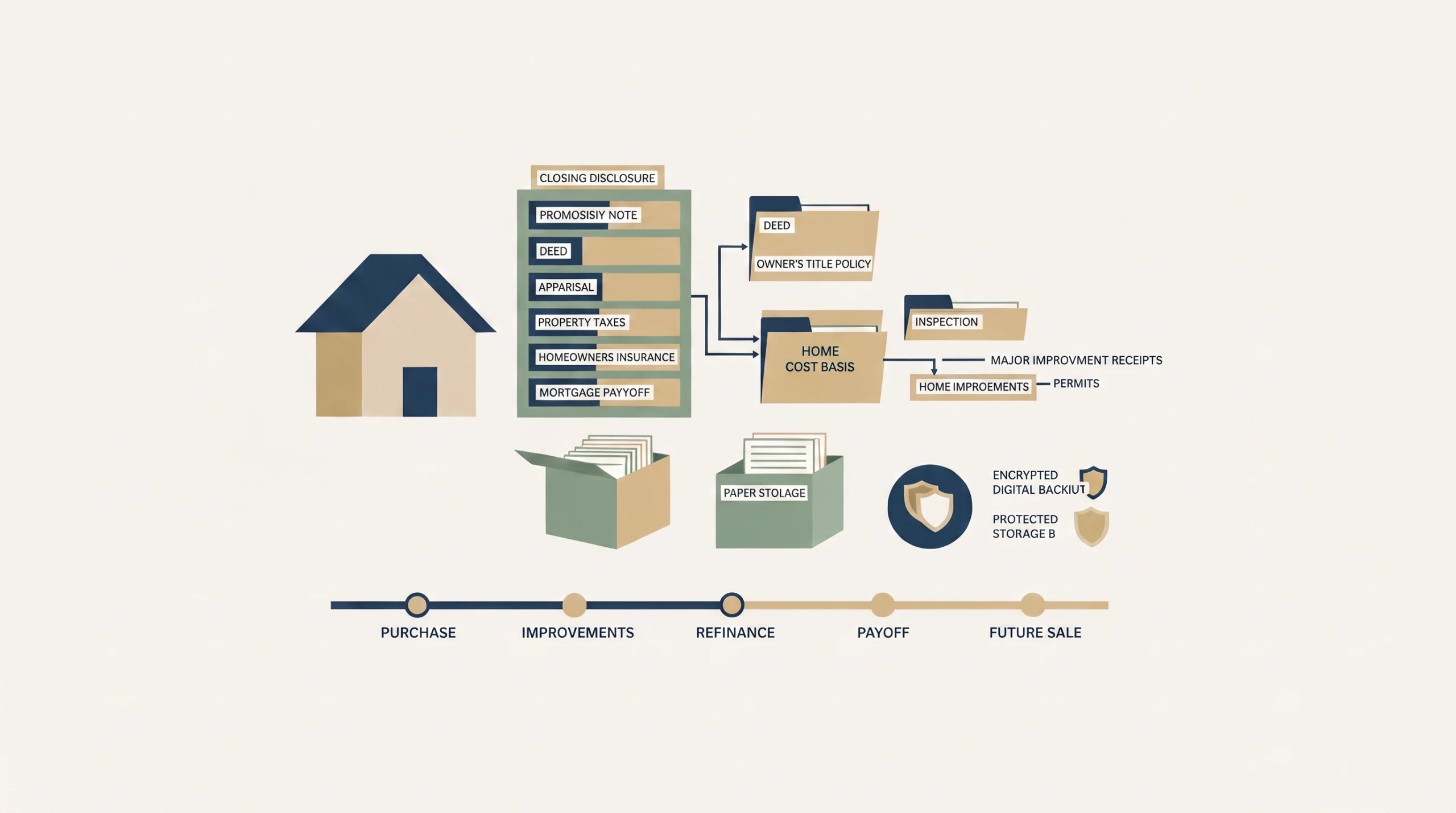
A mortgage closing can produce a large stack of paper or a folder filled with electronic files. Once the purchase is complete, it may be tempting to save only the first payment notice and discard the rest.
That can create problems later. Closing documents may be needed to review the loan terms, correct a servicing error, refinance, remove mortgage insurance, calculate taxes, file an insurance claim, or sell the property.
The safest approach is to keep the complete final closing package. A smaller group of key documents should remain easy to locate for as long as you own the home.
Keep the Complete Final Closing Package
The Consumer Financial Protection Bureau recommends saving the full set of final loan and purchase documents exactly as received. It identifies four especially important records: the Closing Disclosure, promissory note, mortgage or deed of trust, and deed. The CFPB explains what homeowners should save after closing.
Do not assume the lender, title company, or mortgage servicer will always have an accessible copy. Companies merge, systems change, servicing transfers, and online portals may limit how long documents remain available.
Download electronic closing documents instead of leaving them only in an email or online portal. Make sure each file opens correctly and contains every page before storing it.
The Closing Disclosure
The Closing Disclosure provides the final loan terms and an itemized record of the transaction. It shows the loan amount, interest rate, monthly principal and interest, projected payment, closing costs, lender credits, seller credits, prepaid expenses, escrow deposits, and cash required at closing.
This document can be useful when reviewing a future refinance or comparing the original loan with a payoff statement. It may also help a tax professional identify costs that could affect a tax return or the property’s basis.
Federal rules generally require creditors or later owners and servicers to retain the Closing Disclosure for five years after consummation. That requirement applies to the financial institution. It should not replace the homeowner’s own records. The current federal record-retention rule explains the five-year requirement for Closing Disclosures.
The Promissory Note
The promissory note is the borrower’s agreement to repay the loan. It states the original principal amount, interest rate, payment terms, maturity date, and consequences of failing to pay as agreed.
The note may also address late charges, payment application, adjustable-rate changes, and possible prepayment terms. It is one of the best documents to review when a borrower has a question about the basic mortgage agreement.
Keep the note until the loan has been paid in full. After payoff, retain it with the payoff confirmation and lien-release records.
The Mortgage or Deed of Trust
The mortgage, security instrument, or deed of trust places a lien against the property as security for the loan. Nebraska transactions commonly use a deed of trust.
This document describes the borrower’s responsibilities related to payments, insurance, property taxes, occupancy, maintenance, and protection of the lender’s interest. Riders may add terms for an adjustable-rate loan, condominium, planned-unit development, second home, or other property feature.
Keep the full document and every rider until the mortgage is paid and the lien release has been confirmed. A recorded copy may be available from the county, but the homeowner should still retain the signed closing version.
The Deed and Title Records
The deed transfers legal ownership of the property. Keep it permanently with the property records, even though the recorded version should also be available from the county register of deeds.
The owner’s title insurance policy should also be retained for as long as you own the property and potentially after a sale if a prior title issue later creates a claim. This policy is different from the lender’s title policy, which protects the mortgage lender.
Save the title commitment, final title policy, survey when one was completed, legal description, easements, and any recorded agreements affecting the property. These documents may become important when adding a fence, building an addition, resolving a boundary concern, or selling.
Keep Appraisal, Inspection, and Repair Records
The appraisal documents the lender’s opinion of value at the time of the transaction. It may help provide context for a later refinance, property-tax protest, sale, or insurance discussion, although it does not establish the home’s value forever.
The home inspection, pest inspection, sewer inspection, radon report, well or septic records, and repair invoices should remain with the property file. They create a useful history of the home’s condition and completed work.
Keep permits, contractor agreements, warranties, receipts, before-and-after photographs, and proof of payment for major improvements. Examples include an addition, finished basement, new roof, replacement windows, heating and cooling system, electrical upgrade, or major kitchen renovation.
Routine repair receipts can also be useful for warranties and insurance claims, although not every repair changes the home’s tax basis.
Improvement Records May Affect a Future Sale
The original purchase price is one part of the home’s cost basis. Certain acquisition costs and qualifying capital improvements may increase the adjusted basis, while other events can reduce it.
A higher documented basis can reduce the taxable gain calculated when the property is sold. The rules distinguish capital improvements from routine repairs and maintenance, so homeowners should not assume every receipt creates a tax benefit.
The IRS advises homeowners to keep records supporting the property’s adjusted basis. In general, those records should be kept until three years after the due date of the tax return for the year in which the home was sold. IRS Publication 523 provides current home-sale recordkeeping guidance.
Tax situations can differ, especially for rental use, home offices, casualty losses, depreciation, inherited property, divorce, or prior home-sale gain deferrals. A qualified tax professional should determine which costs affect the basis and how long specific records should be retained.
Save Ongoing Mortgage and Property Records
After closing, continue adding important documents to the file. This may include annual escrow statements, property-tax bills, homeowners-insurance declarations, mortgage-insurance notices, loan-modification agreements, recast confirmations, and servicing-transfer notices.
Keep proof of extra principal payments and any large one-time payments. If the servicer applies money incorrectly, bank statements and transaction confirmations can help establish what happened.
When the mortgage is paid off, save the final payoff statement, proof of payment, escrow refund, and recorded release or satisfaction of the lien. Do not assume that a zero online balance proves the county record was properly released.
Paper Storage Versus Digital Storage
Paper records are simple to access and useful when an original signature or certified copy matters. Their disadvantages include fire, water damage, loss, and the amount of space required.
Digital records are searchable, easy to duplicate, and convenient when a lender, accountant, insurer, or title company requests a copy. They can still be lost through a failed device, deleted account, forgotten password, or expired closing portal.
A practical plan uses both formats for the most important documents. Keep original or certified property documents in a fire-resistant location. Store encrypted digital copies in at least two secure places, such as a protected local drive and a reputable cloud backup.
Use clear file names that include the property, document type, and date. Avoid sending private closing documents through unsecured email when a secure upload option is available.
Pros and Cons of Keeping the Full File
Keeping everything requires more storage and organization. Some documents may never be used again, and the package can contain duplicate or preliminary versions.
The benefit is having a complete history when a question arises years later. A missing document can be difficult or expensive to recreate after a lender closes, a contractor retires, or a title company changes systems.
The best compromise is to keep the complete final closing package while organizing the key records in a smaller permanent folder. Preliminary worksheets and duplicate unsigned drafts can be separated from the signed final documents.
Who Needs Especially Detailed Records?
Detailed records are especially important for homeowners planning major renovations, converting a home to a rental, using part of the property for business, or expecting to keep the property for many years.
The same applies after divorce, inheritance, construction, multiple refinances, loan modifications, property-line disputes, or insurance claims. These situations can involve ownership, basis, lien, or payment questions that depend on older documents.
Build the File From the Beginning
The easiest time to organize home records is immediately after closing. Save the full closing package, identify the permanent documents, and add tax, insurance, improvement, and mortgage records as they arrive.
At Capital City Mortgage, we review the final loan terms with Nebraska borrowers and help make sure they understand the documents, payment, escrow account, and next steps. A thoroughly prepared closing should leave the homeowner with both a completed loan and a clear record of the transaction.
Frequently Asked Questions
How long should I keep my mortgage closing documents?
Keep the complete final closing package for as long as you own the property. Retain key loan, payoff, lien-release, ownership, improvement, and tax records longer when they may affect a future claim, sale, or tax return.
Which four closing documents are most important?
The four key documents are the Closing Disclosure, promissory note, mortgage or deed of trust, and deed. Homeowners should also keep the owner’s title policy and the complete signed closing package.
Should I keep receipts for home improvements?
Yes. Keep contracts, permits, invoices, receipts, warranties, photographs, and proof of payment for major improvements. These records may support warranties, insurance claims, resale disclosures, and the home’s adjusted tax basis.
Are digital copies of closing documents enough?
Digital copies are useful if they are complete, readable, secure, and backed up. Keep original or certified versions of important ownership, title, and property documents when available.